Facebook

Showing posts with label Shrine. Show all posts

Thursday, January 13, 2022

Shah Rukn-e-Alam

Sheik Rukn-ud-Din Abul Fath (1251-1335) generally known by the title Rukn-e-Alam (Pillar of the World) was among the prominent Sufi holy people from Multan, Pakistan. He was the child of another Sufi sage, Pir Sadar-Al-Din Arif, and was the grandson and replacement of Shaikh Baha-Ud-Din Zakariya.

Shaikh Rukn-e-Alam (Rukn-al-Din) was covered in the sepulcher of his granddad, as per his own will. After at some point, in any case, his final resting place was moved to the current catacomb, which was worked somewhere in the range of 1320 and 1324. The holy person is as yet venerated today and his burial chamber is the focal point of the journey of north of 100,000 pioneers from everywhere South Asia who visit and recognize his memory.


The burial chamber building is an octagon, 51 feet 9 creeps in distance across inside, with dividers 41 feet 4 inches high and 13 feet 3 inches thick, upheld at the points by inclining towers. Over this is a more modest octagon 25 feet 8 inches, on the outside side, and 26 feet 10 inches high, leaving a restricted entry all round the highest point of the lower story for the Moazzan, or public guest to petitions. The entire is overcomed by a hemispherical arch of 58 feet outside distance across. The complete tallness of the structure, including a plinth of 3 feet, is 100 feet. As it remains on the strategic position, the complete stature over the street level is 150 feet. Other than its strict significance, the sepulcher is likewise of impressive archeological worth as its vault is rumored to be the second biggest on the planet, after Gol Gumbaz of Bijapur, India.

The sepulcher is constructed altogether of red block, limited with light emissions wood, which have now become dark after such countless hundreds of years. The entire of the outside is intricately ornamented with coated tile boards, string-courses and parapets. Colors utilized are dull blue, purplish blue, and white, appeared differently in relation to the dark red of the finely cleaned blocks. The burial chamber was said to have been worked by Ghias-ud-Din Tughlak for himself during the times of his governorship of Depalpur, somewhere in the range of 1320 and 1324 AD, however was given by his child, Muhammad receptacle Tughluq to the descendents of Shah Rukn-e-Alam for the last's internment in 1330.


During the 1970s the catacomb was entirely fixed and remodeled by the Auqaf Department of the Punjab Government. The whole sparkling coated inside is the consequence of new tiles and brickwork done by the Kashigars of Multan.


Wednesday, January 5, 2022


The Spiritual Attraction of Swat, KPK

Swat is the district of KPK province of Pakistan. It is considered as the third largest district of KPK having population of 2,309,570. It was also considered as the Switzerland of the Pakistan due to its beautiful landscape and mountains covered with snowcaps.

History of Swat

The old name of swat was UDYANA which was then changed to SUVASTU. This land was first captured by Mahmud of Ghazni which was then taken by the Yusufzais. Majority of the local speak Pashto as their native language. They also speak Urdu to great extent. It was the princely state of Yusufzais which become the part of Pakistan after independence.

Swat valley was greatly affected by natural disasters including floods and earth quake. The 2010 flood destroyed the infrastructure and roads. The tourist points were affected badly. Before 2008 Taliban and Pakistan Army war in the region the buildings, roads and bridges were damaged. The peaceful region of swat was considered as dangerous area back in 2008. Several incidents of killing and kidnapping of foreign tourist damaged the image of swat. These incidents also force the local people to left the region and migrate to other districts of KPK.

After 2009, Pakistan Army took over the valley and restored the infrastructure, roads, bridges and schools. Slowly and gradually the peace of the valley was restored by the help of local people, government and Pakistan Army and forces.

Now Swat valley is one of the top tourism destinations in Pakistan and also in the world. The beauty attracts a lot of tourist around the world especially in winter season. In winter season, ski players all over the world visit Malamjaba for ski tournaments.

Heritage of Swat Valley

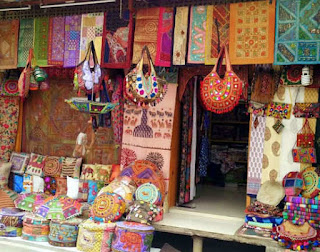
The people of swat valley are simple innocent people. They usually made handmade ornaments and embroidery shawls, bags, caps and other decorative items. The basic source of income is agriculture. They grow different fruits and vegetables. The apple of swat is famous in Pakistan. 18 different types of apples grow in swat region. People also grow strawberries peaches and oranges. Swati embroidery is also famous in swat. In past, it was the hobby of the unmarried young girls to make embroidery dresses, shawls, pillow covers, table cloth, scarves, handkerchief etc.


Heritage places to visit in Swat

There are many old heritage and famous tourist points in swat which many of us don’t know at all.

Buddhist Stupas

There are many famous archaeological sites in swat which belong to Buddhist period. There are estimated 1400 stupas and monasteries in swat. They were used for worship and religion education.

Swat Museum

There is also swat museum which contain old heritage belong to the Gandhara Civilization. It is located between the cities of Mingora and Saidu Sharif.

White Palace (Sufed Mahal)

White Palace (Sufe'd Mahal)
In Saidu Sharif there is a famous palace known as White Palace or Sufed Mahal. It was the residence of Wali before and after the independence of Pakistan. This palace contains 30 rooms. People from different region visit this beautiful palace.


Shrine of Akhund (Saidu Baba)

Saidu is called “Pious City” because of the shrine of Akhund. Saidu Baba was a religious leader who played important role in the formation of Swat. He fought many battles against the British Forces by leading the Yusufzais and other Pashtun tribes.

Every year large number of visitors and devotes visit the shrine of Saidu Baba in the Swat. 

Saidu Baba Mosque


Saidu Baba Mosque


Barikot Ghundai

It is a small town in the district of Swat, KPK. In past years, many Hindu temples were discovered there. Barikot Ghundai becomes the famous and attractive place after the discovery of 1300 years old temple. The temple was believed to be linked with the God Vishnu. It was built by Hindus more than 1300 years ago during the period of Hindu Shahi. Recently, many archeologists around the world visited the place to gather samples, traces and evidences.


Old Buddha


Swat is also known as “The Switzerland of Pakistan”, or “Mini Switzerland” due to its beautiful landscapes, valleys, lakes, and mountains covered with snowcaps. The detail will be shared in next article/blog.

 Hope you all enjoyed reading the article.