Facebook

Showing posts with label Attraction. Show all posts

Saturday, January 15, 2022

Bhanbore

Gate of Bhanbore Fort

Situated around 65 km east of Karachi is Banbhore, one of the most captivating and secretive verifiable attractions in Sindh. The site is regularly spelled as "Bambhore" and has played a huge role throughout the entire existence of Islam in South Asia. As per the discoveries of certain history specialists, the site of Bhanbore has the remainders of the old city of Debal or Daybul. It is a similar city where Raja Dahir, an acclaimed Hindu leader of the time, was crushed by the Arab officer Muhammad bin Qasim, who was a gutsy Muslim champion in the Islamic and political history of the subcontinent.

Then again, according to a few other archeological records, the historical backdrop of Bhanbhore has ended up being far more seasoned than the historical backdrop of Islam, tracing all the way back to the primary century BC. Assuming we collect every one of the authentic records together, we reach the resolution that the site was managed by Scytho-Parthian (from first century BC to the second century AD), Hindu-Buddhist (from second century AD to the eighth century AD), and Islamic Rulers in South Asia (from eighth century AD to the thirteenth century AD). There are the remaining parts of an old mosque with an engraving, which is accepted to be north of 1200 years of age. It is found on the eastern side of Bhanbore and is, no doubt, one of the most all around safeguarded instances of the most established mosques in the area.

One of the most unmistakable milestones on the site is a 10-meter tall hill situated close to the shore of Gharo Creek. Bhanbhore once facilitated a completely functional port known as 'Debal Port', which traces all the way back to as old as the middle age time frame. Clearly, the port isn't utilitarian any longer yet its set of experiences actually astounds a many individuals. Since the primary wellspring of the consumable water supply of this old city was River Indus, the destiny of the city was extraordinarily reliant upon the progression of this waterway. Along these lines, when Indus shifted its direction in the thirteenth century, the city was deserted and was never possessed again. The classic story of Sassi and Punnu is likewise connected with this traveler objective in Sindh and it is frequently called "the city of two sweethearts".

Sindh Coastal Highway goes through the city of Bhanbore, making it one of the most effectively available vacation spots in Sindh. Connected with National Highway 5, it is likewise the best course to take in the event that you want to visit this archeological site from Karachi. Sunway Lagoon, one of the most popular water parks in Karachi, is additionally a ways off of only 16 km from the site of Bhanbore. Additionally, assuming you will remain in Bhanbhore, the convenience is accessible at Bhanbhore Rest House, which has been as of late redesigned. You can lease a space for a night in Bhanbore Rest House for as low as PKR 1,500. The temperatures in Bhanbore can reach up to 45 degrees Celsius, and that implies winter is the best an ideal opportunity to visit the site.

Location: Coast of Debal Beach, 65 km from Karachi

Entry Fee: Starting from as low as PKR 10/- 

Timings: 7:30 AM - 5:30 PM

Ranikot Fort

The Wall of Sindh


Considered as a real part of the most superb and puzzling spots in Pakistan that tumble off in an unexpected direction, Ranikot post is found in no place in one of the most segregated locales of Jamshoro District in Sindh. Standing wonderfully to date, the stronghold of Ranikot is otherwise called 'The Great Wall of Sindh'. It is likewise accepted to be the biggest stronghold on the planet as the outline of the post extraordinarily gauges around 32 km. The historical backdrop of this stronghold traces all the way back to the main quarter of the nineteenth century. The fortress dividers are designed all over according to the regular forms of the sloping fields and component semi-roundabout strongholds at various spans, adding to the magnificence of the outside.

The stronghold divider is just on the three sides of the construction, while the fourth side, which is the northern side, is covered with the grand pinnacles of the raised hillocks. Subsequent to going around 5-6 miles inside the limit divider, you would go over a little fort, around 5-6 which is accepted to be the illustrious home for the decision group of Mirs. At the entry of the post from the southern side, there is a twofold entryway door. As you enter the post, you'll track down several flawlessly enlivened trimmings, designed with cut stones and flower plans. Upon your visit to the fortress, you would see that its entire engineering contains just stone and lime, making it one of the most special traveler objections in Sindh.

Assuming that you are coming from Karachi, you can helpfully arrive at the fortress by going through the course of National Highway 5. When you withdraw from Karachi, you really want to make a beeline for Dadu through the Indus Highway. Since it is one of the main intercity road links of Pakistan, the road is in superb condition. It's very nearly an extended excursion to get to San, a modest community of Sindh. As you go somewhat further from the town you will run over a redirection. There you will be welcomed by a corroded board, which reports that you are somewhere in the range of thirty km from Ranikot.

Remember that the street prompting the verifiable fortification is in a feeble condition. This creates the distance somewhat longer for you and it very well may be shrouded in 30 to 40 minutes. It would lead you to the town of Meeri, after which you really want to cover a distance of a few km. Leave your vehicle and begin strolling through a misleading way for a couple of meters. This is the means by which you can arrive at the eastern side of the fortress through this off-beaten track. After arriving at your objective, you can climb uphill along the limit dividers of the stronghold to partake in the all encompassing perspective on the scene. On the two sides as it offers an all encompassing perspective on the scene. Be that as it may, in the event that you are getting ready for a short term visit close to the post, you can likewise make a booking at an as of late built Sindh Tourism Development Corporation (STDC) visitor house, which is furnished with every one of the vital highlights to work with your visit.

Location: Ranikot Fort Road, Jamshoro

Timings: Open 24 hours

Mohenjo Daro

The Great Stupa Mound

The city of Mohenjo Daro is perhaps the most popular UNESCO World Heritage Site found in Pakistan. According to the discoveries of archeologists, the historical backdrop of Mohenjo Daro is millennia old, tracing all the way back to 26th century BC. This antiquated city was a piece of the major metropolitan settlement of the Indus Valley Civilization, otherwise called Harappan Civilization. Mohenjo Daro is a word gotten from Sindhi, a language expressed locally in the area, and that signifies 'Hill of the Dead'.

For over 3,700 years, the antiquated site of Mohenjo Daro stayed unseen. In any case, a few obstruction discoveries during the 1920s prompted enormous scope unearthing that at last uncover the archeological jewel of Mohenjo Daro. The removal exercises were driven by John Marshall, who was the then Director-General of Archeological Survey of India.

A good ways off of 5 km from the Mohenjo Daro air terminal, the superb 5000-year-old vestiges are undeniably found away from the buzzing about of any metropolitan region of the territory. Mohenjo Daro is additionally considered as a real part of the most well known verifiable attractions in Sindh from where numerous antiquated relics have been uncovered. These incorporate various sorts of devices produced using materials like stone and copper, figures, estimating instruments like equilibrium scale and loads, gems articles, and toys. These ancient pieces are shown in the Mohenjo Daro gallery, which is situated a ways off of around 800 meters from the archeological city of Mohenjo Daro.

Going via air from Karachi to Mohenjo Daro will require no less than 60 minutes. Nonetheless, because of the absence of cutting edge highlights and framework, just more modest airplane can land and take off from here. The pace of a single direction airfare to/from Mohenjo Daro is around PKR 6,000, which shifts from one aircraft to another. Assuming you are visiting the recorded site by street from Karachi, it will be a six-hour drive. Essentially, you can likewise take a train from Karachi to Dokri, which is an unassuming community situated a ways off of 7 km from Mohenjo Daro.

Location: 38 km south of Larkana City

Entry Fee: PKR 10 for locals and PKR 200 for foreigners

Timings: 8 am till 7 pm (from April to September) and 9 am till 5 pm (from October to March)

Gorakh Hill Station


The Murree of Sindh


One of the most well known hill stations in Pakistan, Gorakh Hill is among the places of interest in Sindh that satisfy everyone's expectations. Found inside the core of Sindh in Dadu District, the hill station is incredibly situated at a height of 5,688 ft (1,734 m) above ocean level and is famously known as the 'Murree of Sindh.' Gorakh Hill was first found during the British Rule during the 1860s, which was totally evolved and sent off as a hill station over 10 years after the fact in 1989.

Experience searchers from everywhere the nation come here to partake in the stunning all encompassing normal perspectives that the hill station brings to the table just as stargazing around evening time with unique huge fire plans. To work with the sightseers visiting the locale, there is a campground, a café, and an inn. Since the quantity of guests to the spot is developing as time passes, plans to redesign the course to the Gorakh Hill Station are ready to go to make this vacationer location in Sindh effectively open. It is found 94 km from the city of Dadu.

Assuming you have plans to visit Gorakh Hill from Karachi, you can talk with many voyaging organizations offering trip bundles for the hill station. Food, convenience, setting up camp hardware, and transport are presented on these visits. Because of high rise, Gorakh Hill observers fascinating climate designs over time.

It is perhaps the coldest locale in Sindh with temperatures dipping under zero in winters and going to a limit of 20 degrees throughout the late spring season. A 2-roadtrip to Gorakh might cost you around PKR 6,500 to PKR 7,500. The visit cost might differ contingent upon the office you pick. The separation from Karachi to Gorakh is 403 km, which is a drive of around 7 hours. For your excursion to Gorakh Hill, a 4×4 vehicle will be the most appropriate vehicle.

Location: 94 km Northwest of Dadu City

TimingsOpen 24 hours


Why you should visit Pakistan at least once

Pakistan is rich in its traveler destinations. The country is home to the oldest civilizations within the world, has innumerable locations of scenic beauty, world’s highest mountains, many non-secular and historic places, distinctive arts and crafts and an upscale culture and heritage.

Pakistan is home to variety of UN agency world heritage sites like, archaeological Ruins at Mohenjo-Daro, Buddhist Ruins of Takht-i-Bahi and neighbor town Remains, Fort and Shalimar Gardens, Historical Monuments at Taxila.


Cultural Diversity

Pakistan has four provinces, with each having its own culture, traditions, non-standard speech and palette of food and art. This cultural diversity stems from the ethnic variation inflicting it to possess profound and long lasting effects on the whole culture as a whole. If you travel across the entire country, crossover to every totally different province is sort of like aiming to a brand new country wherever you'll notice the distinction within the means folks look, dress, speak and behave. This diversity is what enriches vary} of food we tend to have, the nice range of music and instruments we play, the enriched variety of songs and literature we tend to scan furthermore because the nice range of native dialects we own. It’s a really fascinating expertise as results of you’re able to experience a mess of distinctive cultures underneath the umbrella of one collective culture, creating your trip a lesson in diversity.

Traditional Foods

The food in Pakistan is known for its specialized use of all styles of herbs and spices. Each ancient dish could be a special concoction whose formula has been formed through generations to administer it an ideal taste. every dish, whether or not it's lentils or chicken roast or perhaps lamb needs to be seasoned and seared to perfection, and thus once the ultimate dish is ready it is a pleasure to eat every single bite. The country is additionally famous for its distinctive sweets referred to as ‘Mithai’, sweet product created with native recipes and screw-topped with an assortment of nuts. Pakistan is known for its agriculture and thus you must be ready to style the sort of organic fruits and vegetables you'll be able to solely dream of.    


Handicrafts of Pakistan


This country has such an abundance of craftsmen that are so marvelously experienced at manufacturing sure product as a result of they need learned a selected ability from their fathers, who successively learned it from their fathers. There are superbly woven carpets that take over six months to form thanks to the complexness of the styles adorned on them. There are splendid embroideries done on all varieties of clothes, special jewelry is additionally move perfection mistreatment hands rather than machines. Utensils made up of copper and silver follow a similar pattern of distinctive craftsmanship, creating the country a haven for hand-crafted handicrafts that don't seem to be offered during this selection anyplace else within the world.


Spiritual Attraction of Mosques

During the centuries that the Mughals reigned over the sub-continent, they employed the foremost illustrious artists and designers of the time to make marvelous mosques that are still as wonderful as they were in their heyday, like the Wazir Khan house of worship and therefore the the} Badshahi house of worship in Lahore. There’s also Emperor House of worship in Sindh that was commissioned by the emperor Shah Jahan and is created entirely out of marble. The architecture, minarets and exquisite design in the course of unflawed calligraphy, make these mosques a beaux arts marvel that ought to be old first-hand.

Khudaband Mosque


Shah Faisal Masjid


The beauty of Truck Art

Anyone who visits Pakistan is totally blown away by the attractive art that fills all the trucks. These fantastically embellished trucks became a widespread illustration of Pakistani culture. There is a complete sub-culture that revolves round the ornamentation of them and there are special artisans skillful within the art to which this task is assigned. There are  bright colors and designs, symbols and emblems, known lines of poetry and endless birds and flowers inscribed on all the massive trucks that traverse the roads of the country day and night, carrying product from one place to another. You will never ever see a truck that's not a chunk of distinctive art and every truck may be a colorful illustration of the thriving culture of Pakistan. The Truck Art of Pakistan is also famous in different countries such as Canada, Australia and UK.

Truck Art

Truck Art


Thursday, January 13, 2022

Shah Rukn-e-Alam

Sheik Rukn-ud-Din Abul Fath (1251-1335) generally known by the title Rukn-e-Alam (Pillar of the World) was among the prominent Sufi holy people from Multan, Pakistan. He was the child of another Sufi sage, Pir Sadar-Al-Din Arif, and was the grandson and replacement of Shaikh Baha-Ud-Din Zakariya.

Shaikh Rukn-e-Alam (Rukn-al-Din) was covered in the sepulcher of his granddad, as per his own will. After at some point, in any case, his final resting place was moved to the current catacomb, which was worked somewhere in the range of 1320 and 1324. The holy person is as yet venerated today and his burial chamber is the focal point of the journey of north of 100,000 pioneers from everywhere South Asia who visit and recognize his memory.


The burial chamber building is an octagon, 51 feet 9 creeps in distance across inside, with dividers 41 feet 4 inches high and 13 feet 3 inches thick, upheld at the points by inclining towers. Over this is a more modest octagon 25 feet 8 inches, on the outside side, and 26 feet 10 inches high, leaving a restricted entry all round the highest point of the lower story for the Moazzan, or public guest to petitions. The entire is overcomed by a hemispherical arch of 58 feet outside distance across. The complete tallness of the structure, including a plinth of 3 feet, is 100 feet. As it remains on the strategic position, the complete stature over the street level is 150 feet. Other than its strict significance, the sepulcher is likewise of impressive archeological worth as its vault is rumored to be the second biggest on the planet, after Gol Gumbaz of Bijapur, India.

The sepulcher is constructed altogether of red block, limited with light emissions wood, which have now become dark after such countless hundreds of years. The entire of the outside is intricately ornamented with coated tile boards, string-courses and parapets. Colors utilized are dull blue, purplish blue, and white, appeared differently in relation to the dark red of the finely cleaned blocks. The burial chamber was said to have been worked by Ghias-ud-Din Tughlak for himself during the times of his governorship of Depalpur, somewhere in the range of 1320 and 1324 AD, however was given by his child, Muhammad receptacle Tughluq to the descendents of Shah Rukn-e-Alam for the last's internment in 1330.


During the 1970s the catacomb was entirely fixed and remodeled by the Auqaf Department of the Punjab Government. The whole sparkling coated inside is the consequence of new tiles and brickwork done by the Kashigars of Multan.


Wednesday, January 5, 2022


The Spiritual Attraction of Swat, KPK

Swat is the district of KPK province of Pakistan. It is considered as the third largest district of KPK having population of 2,309,570. It was also considered as the Switzerland of the Pakistan due to its beautiful landscape and mountains covered with snowcaps.

History of Swat

The old name of swat was UDYANA which was then changed to SUVASTU. This land was first captured by Mahmud of Ghazni which was then taken by the Yusufzais. Majority of the local speak Pashto as their native language. They also speak Urdu to great extent. It was the princely state of Yusufzais which become the part of Pakistan after independence.

Swat valley was greatly affected by natural disasters including floods and earth quake. The 2010 flood destroyed the infrastructure and roads. The tourist points were affected badly. Before 2008 Taliban and Pakistan Army war in the region the buildings, roads and bridges were damaged. The peaceful region of swat was considered as dangerous area back in 2008. Several incidents of killing and kidnapping of foreign tourist damaged the image of swat. These incidents also force the local people to left the region and migrate to other districts of KPK.

After 2009, Pakistan Army took over the valley and restored the infrastructure, roads, bridges and schools. Slowly and gradually the peace of the valley was restored by the help of local people, government and Pakistan Army and forces.

Now Swat valley is one of the top tourism destinations in Pakistan and also in the world. The beauty attracts a lot of tourist around the world especially in winter season. In winter season, ski players all over the world visit Malamjaba for ski tournaments.

Heritage of Swat Valley

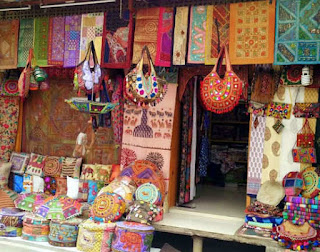
The people of swat valley are simple innocent people. They usually made handmade ornaments and embroidery shawls, bags, caps and other decorative items. The basic source of income is agriculture. They grow different fruits and vegetables. The apple of swat is famous in Pakistan. 18 different types of apples grow in swat region. People also grow strawberries peaches and oranges. Swati embroidery is also famous in swat. In past, it was the hobby of the unmarried young girls to make embroidery dresses, shawls, pillow covers, table cloth, scarves, handkerchief etc.


Heritage places to visit in Swat

There are many old heritage and famous tourist points in swat which many of us don’t know at all.

Buddhist Stupas

There are many famous archaeological sites in swat which belong to Buddhist period. There are estimated 1400 stupas and monasteries in swat. They were used for worship and religion education.

Swat Museum

There is also swat museum which contain old heritage belong to the Gandhara Civilization. It is located between the cities of Mingora and Saidu Sharif.

White Palace (Sufed Mahal)

White Palace (Sufe'd Mahal)
In Saidu Sharif there is a famous palace known as White Palace or Sufed Mahal. It was the residence of Wali before and after the independence of Pakistan. This palace contains 30 rooms. People from different region visit this beautiful palace.


Shrine of Akhund (Saidu Baba)

Saidu is called “Pious City” because of the shrine of Akhund. Saidu Baba was a religious leader who played important role in the formation of Swat. He fought many battles against the British Forces by leading the Yusufzais and other Pashtun tribes.

Every year large number of visitors and devotes visit the shrine of Saidu Baba in the Swat. 

Saidu Baba Mosque


Saidu Baba Mosque


Barikot Ghundai

It is a small town in the district of Swat, KPK. In past years, many Hindu temples were discovered there. Barikot Ghundai becomes the famous and attractive place after the discovery of 1300 years old temple. The temple was believed to be linked with the God Vishnu. It was built by Hindus more than 1300 years ago during the period of Hindu Shahi. Recently, many archeologists around the world visited the place to gather samples, traces and evidences.


Old Buddha


Swat is also known as “The Switzerland of Pakistan”, or “Mini Switzerland” due to its beautiful landscapes, valleys, lakes, and mountains covered with snowcaps. The detail will be shared in next article/blog.

 Hope you all enjoyed reading the article.