Facebook

Showing posts with label Architecture. Show all posts

Saturday, January 15, 2022


Why you should visit Pakistan at least once

Pakistan is rich in its traveler destinations. The country is home to the oldest civilizations within the world, has innumerable locations of scenic beauty, world’s highest mountains, many non-secular and historic places, distinctive arts and crafts and an upscale culture and heritage.

Pakistan is home to variety of UN agency world heritage sites like, archaeological Ruins at Mohenjo-Daro, Buddhist Ruins of Takht-i-Bahi and neighbor town Remains, Fort and Shalimar Gardens, Historical Monuments at Taxila.


Cultural Diversity

Pakistan has four provinces, with each having its own culture, traditions, non-standard speech and palette of food and art. This cultural diversity stems from the ethnic variation inflicting it to possess profound and long lasting effects on the whole culture as a whole. If you travel across the entire country, crossover to every totally different province is sort of like aiming to a brand new country wherever you'll notice the distinction within the means folks look, dress, speak and behave. This diversity is what enriches vary} of food we tend to have, the nice range of music and instruments we play, the enriched variety of songs and literature we tend to scan furthermore because the nice range of native dialects we own. It’s a really fascinating expertise as results of you’re able to experience a mess of distinctive cultures underneath the umbrella of one collective culture, creating your trip a lesson in diversity.

Traditional Foods

The food in Pakistan is known for its specialized use of all styles of herbs and spices. Each ancient dish could be a special concoction whose formula has been formed through generations to administer it an ideal taste. every dish, whether or not it's lentils or chicken roast or perhaps lamb needs to be seasoned and seared to perfection, and thus once the ultimate dish is ready it is a pleasure to eat every single bite. The country is additionally famous for its distinctive sweets referred to as ‘Mithai’, sweet product created with native recipes and screw-topped with an assortment of nuts. Pakistan is known for its agriculture and thus you must be ready to style the sort of organic fruits and vegetables you'll be able to solely dream of.    


Handicrafts of Pakistan


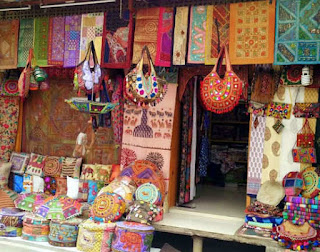
This country has such an abundance of craftsmen that are so marvelously experienced at manufacturing sure product as a result of they need learned a selected ability from their fathers, who successively learned it from their fathers. There are superbly woven carpets that take over six months to form thanks to the complexness of the styles adorned on them. There are splendid embroideries done on all varieties of clothes, special jewelry is additionally move perfection mistreatment hands rather than machines. Utensils made up of copper and silver follow a similar pattern of distinctive craftsmanship, creating the country a haven for hand-crafted handicrafts that don't seem to be offered during this selection anyplace else within the world.


Spiritual Attraction of Mosques

During the centuries that the Mughals reigned over the sub-continent, they employed the foremost illustrious artists and designers of the time to make marvelous mosques that are still as wonderful as they were in their heyday, like the Wazir Khan house of worship and therefore the the} Badshahi house of worship in Lahore. There’s also Emperor House of worship in Sindh that was commissioned by the emperor Shah Jahan and is created entirely out of marble. The architecture, minarets and exquisite design in the course of unflawed calligraphy, make these mosques a beaux arts marvel that ought to be old first-hand.

Khudaband Mosque


Shah Faisal Masjid


The beauty of Truck Art

Anyone who visits Pakistan is totally blown away by the attractive art that fills all the trucks. These fantastically embellished trucks became a widespread illustration of Pakistani culture. There is a complete sub-culture that revolves round the ornamentation of them and there are special artisans skillful within the art to which this task is assigned. There are  bright colors and designs, symbols and emblems, known lines of poetry and endless birds and flowers inscribed on all the massive trucks that traverse the roads of the country day and night, carrying product from one place to another. You will never ever see a truck that's not a chunk of distinctive art and every truck may be a colorful illustration of the thriving culture of Pakistan. The Truck Art of Pakistan is also famous in different countries such as Canada, Australia and UK.

Truck Art

Truck Art


Friday, January 14, 2022

Bhong Mosque

The late Rais Ghazi Mohammad, the landowner of an enormous bequest, started this undertaking in 1932 in Bhong town, the most significant of the dispersed towns on his huge property. The mosque was to be the most radiant structure in his royal residence compound which likewise incorporated a more modest mosque, a madrasa and spaces for understudies. Crafted by experts accumulated from everywhere Pakistan and India (ace bricklayers and skilled workers from Rajasthan, calligraphers and painters from Karachi), the compound was planned and built over a time of almost 50 years.


 Comprehensively varied in their utilization of sources, the manufacturers acquired complex components from neighboring Lahore, just as Iran, Spain and Turkey, and joined them with Western frontier components of the 1940s. Materials and artworks utilized reach from the conventional (teak, ivory, marble, hued glass, onyx, frosted tile work, fresco, reflect work, overlaid lattice, ceramic, calligraphic work and trim) to the cutting edge and manufactured (marbleised modern tile, fake stone confronting, terrazzo, shaded concrete tile and created iron). Just conventional materials were utilized in the mosque insides. In the expressions of the jury: Bhong cherishes and embodies the famous desire for Pakistan with all its life, pride, pressure and opinion. Its utilization, and abuse, of signs and images communicates suitable developing agonies of an engineering experiencing significant change.


Thursday, January 13, 2022

Wazir Khan Mosque

Background

It was built by the Governor (or Wazir) of the Punjab, Hakim Shaikh Ilm-ud-din Ansari. The construction of the mosque commenced in 1634. A short walk away from the Lahore Fort, the mosque acquired political importance as it became the official destination for the Emperor's Friday congregational prayers.

The Wazir Khan mosque is rectangular, estimating 86.17 x 50.44m (282.7 x 165.4 feet), with the four monumental minarets (minars) characterizing the sides of the principle patio.


It is set on what has come to be known as the Royal Trail, a 1.6 kilometer stretch from Delhi Gate - one of the 13 doors of the walled city of Lahore - that confronted the seat of the Mughal realm. Mughal Emperors rode through this entryway to the Lahore Fort.

Wazir Khan Mosque has borne observer to somewhere around twelve Mughal rulers, the extraordinary time of the British Raj, the ridiculous Partition of the Indian subcontinent, and the short however momentous history of current Pakistan. The mosque was so situated in the focal point of the city that every one of the significant courses and marketplaces connected to it at right points.


Developed over a time of seven years, it was worked around an old underground burial place of the holy person Syed Mohammad Ishaq Gazrooni, otherwise called Miran Badshah, who moved from Iran in the thirteenth Century and resided in Lahore during the hour of the Turkish-Muslim Tughlaq administration.


Badshai Mosque

History 

The development of the mosque was begun in 1671 under the prosperous and blossoming territory of the 6th Mughal Emperor Muhi-ud-Din Muhammad generally known by the name of Aurangzeb. The Badshahi Mosque required just two years to be finished under the management of Fida'i Khan Koka who was Mughal Emperor Aurangzeb's brother by marriage and the legislative head of Lahore. The mosque is intensely impacted by the Persian engineering style and Aurangzeb explicitly followed the style of Shah Jehan's Jama Masjid in Delhi. The normal quality of the two mosques is the red sandstone with white marble decorate. The entry of the mosque further oozes its respectability and style.


The Badshahi Mosque complete name "Masjid Abul Zafar Muhy-ud-Din Mohammad Alamgir Badshah Ghazi" is written in decorated marble over the vaulted entry. The wonderful door itself is exceptionally fascinating as it contains a few chambers that are not open by the overall population, strangely enough one of the rooms is said to contain the hairs of Prophet Muhammad (SAW) and that of his child in-law Ali. This is additionally viewed as one reason for its development.

As you go through the entry you set foot in a broad sandstone cleared yard spreading over an area of 276,000 square feet which can oblige up to 100,000 admirers. The supplication chamber has a central calculated specialty with five specialties flanking it which is around 33% the size of the central specialty. The mosque has three marble vaults, the greatest of which is arranged in the center mark of the mosque, and which is flanked by two more modest curves.


The development of the mosque was begun in 1671 under the prosperous and blossoming territory of the 6th Mughal Emperor Muhi-ud-Din Muhammad generally known by the name of Aurangzeb. The Badshahi Mosque required just two years to be finished under the management of Fida'i Khan Koka who was Mughal Emperor Aurangzeb's brother by marriage and the legislative head of Lahore. The mosque is intensely impacted by the Persian engineering style and Aurangzeb explicitly followed the style of Shah Jehan's Jama Masjid in Delhi. The normal quality of the two mosques is the red sandstone with white marble decorate. The entry of the mosque further oozes its respectability and style.

Architecture 

The Badshahi Mosque is a presentation of the incredible taste and intensity of the sovereign around then, both the inside and outside are particularly created. The rich frivolity in plaster lattice (Manbatkari) and framing with a fresco contact upgrade the inside of the mosque and stone carvings alongside marble trim on red sandstone, particularly of loti structure themes in intense alleviation, embellishes the outside. Four octagonal three-story minarets of 196 feet are found at the four corners of the mosque that are topped by a marble covering

Wednesday, January 5, 2022


The Spiritual Attraction of Swat, KPK

Swat is the district of KPK province of Pakistan. It is considered as the third largest district of KPK having population of 2,309,570. It was also considered as the Switzerland of the Pakistan due to its beautiful landscape and mountains covered with snowcaps.

History of Swat

The old name of swat was UDYANA which was then changed to SUVASTU. This land was first captured by Mahmud of Ghazni which was then taken by the Yusufzais. Majority of the local speak Pashto as their native language. They also speak Urdu to great extent. It was the princely state of Yusufzais which become the part of Pakistan after independence.

Swat valley was greatly affected by natural disasters including floods and earth quake. The 2010 flood destroyed the infrastructure and roads. The tourist points were affected badly. Before 2008 Taliban and Pakistan Army war in the region the buildings, roads and bridges were damaged. The peaceful region of swat was considered as dangerous area back in 2008. Several incidents of killing and kidnapping of foreign tourist damaged the image of swat. These incidents also force the local people to left the region and migrate to other districts of KPK.

After 2009, Pakistan Army took over the valley and restored the infrastructure, roads, bridges and schools. Slowly and gradually the peace of the valley was restored by the help of local people, government and Pakistan Army and forces.

Now Swat valley is one of the top tourism destinations in Pakistan and also in the world. The beauty attracts a lot of tourist around the world especially in winter season. In winter season, ski players all over the world visit Malamjaba for ski tournaments.

Heritage of Swat Valley

The people of swat valley are simple innocent people. They usually made handmade ornaments and embroidery shawls, bags, caps and other decorative items. The basic source of income is agriculture. They grow different fruits and vegetables. The apple of swat is famous in Pakistan. 18 different types of apples grow in swat region. People also grow strawberries peaches and oranges. Swati embroidery is also famous in swat. In past, it was the hobby of the unmarried young girls to make embroidery dresses, shawls, pillow covers, table cloth, scarves, handkerchief etc.


Heritage places to visit in Swat

There are many old heritage and famous tourist points in swat which many of us don’t know at all.

Buddhist Stupas

There are many famous archaeological sites in swat which belong to Buddhist period. There are estimated 1400 stupas and monasteries in swat. They were used for worship and religion education.

Swat Museum

There is also swat museum which contain old heritage belong to the Gandhara Civilization. It is located between the cities of Mingora and Saidu Sharif.

White Palace (Sufed Mahal)

White Palace (Sufe'd Mahal)
In Saidu Sharif there is a famous palace known as White Palace or Sufed Mahal. It was the residence of Wali before and after the independence of Pakistan. This palace contains 30 rooms. People from different region visit this beautiful palace.


Shrine of Akhund (Saidu Baba)

Saidu is called “Pious City” because of the shrine of Akhund. Saidu Baba was a religious leader who played important role in the formation of Swat. He fought many battles against the British Forces by leading the Yusufzais and other Pashtun tribes.

Every year large number of visitors and devotes visit the shrine of Saidu Baba in the Swat. 

Saidu Baba Mosque


Saidu Baba Mosque


Barikot Ghundai

It is a small town in the district of Swat, KPK. In past years, many Hindu temples were discovered there. Barikot Ghundai becomes the famous and attractive place after the discovery of 1300 years old temple. The temple was believed to be linked with the God Vishnu. It was built by Hindus more than 1300 years ago during the period of Hindu Shahi. Recently, many archeologists around the world visited the place to gather samples, traces and evidences.


Old Buddha


Swat is also known as “The Switzerland of Pakistan”, or “Mini Switzerland” due to its beautiful landscapes, valleys, lakes, and mountains covered with snowcaps. The detail will be shared in next article/blog.

 Hope you all enjoyed reading the article.

Wednesday, December 29, 2021


Khyber Pakhtun Khwa (KPK)

Introduction

KPK is the abbreviation of Khyber Pakhtun Khwa. It was previously known as NWFP (North West Frontier Province). This name was given by the British ruler during their rule. It is situated on the North West side of the Pakistan along the Afghanistan border. In 2010, under the18th amendment in Pakistani constitution its name was changed to KPK. The total area of KPK is 74,521 km2.  The official language of the province is Pashto. Others language include Chitrali, Kohistani, Urdu and Hindko.  The capital of KPK is Peshawar.  The Khyber Pakhtun Khwa means “The Pathan/Pashtun Culture and Civilization”.

Climate

Khyber Pakhtunkhwa's environment fluctuates enormously for the region of its size, covering most of Pakistan's environment types. The territory extends southwards from Hindu Kush's Baroghil Pass, covering around six levels of the scope; it is principally a sloping landscape.

Dera Ismail Khan is perhaps the hottest district in South Asia, while the temperature in the mountain reaches toward the north is gentle in the summers and incredibly cold in the colder time of year. Since the air is frequently very dry, the everyday and yearly temperature ranges are very huge.

Dera Ismail Khan


·      Central KPK

Since muggy breezes starting from the Arabian Sea can invade the area, precipitation is generously heavier on the southern sides of Nanga Parbat and in the Lower and Upper Dir Districts than additional north. Winter despondencies produce critical precipitation when they conflict with mountain inclines. 

Nanga Parbat


Nanga Parbat


The storm, notwithstanding its brief term, is frequently powerful. As a result, the southern slants of KPK are Pakistan's wettest locale. Yearly precipitation has a scope of 500 mm (20 inches) in the most secured spots to 1,750 mm (69 inches) in spaces of Abbottabad and Mansehra Districts.


·        Southern KPK

The temperature in southern KPK is surprisingly high: Dera Ismail Khan, the region's southernmost locale, is perceived as being perhaps the most smoking region on the planet, with a normal temperature of 50 °C (122 °F). During the cooler months, evening time can be cold and ices are normal; snow is exceptional, while daytime temperatures remain sensibly warm with a lot of daylight.

Dera Ismail Khan


 Culture of KPK

Pashtun culture depends on Pashtunwali and Islam that is an old lifestyle. Its set of experiences and roots have been antagonistic, however there couldn't be any agreement shaped. There were various hypotheses about the starting points of Pashtuns, expecting that they have Jewish, Arab, Aryan, or mixed origin. None was adequately enticing to draw a choice. Pathans are profoundly inquisitive and anxious to be aware of their race's starting point; however it may not be a major worry for specific races. Certain individuals expect that they may likewise be connected to Khalid Bin Waleed and as a result of that that Pathans might have an Arabic foundation.

All the while, one hypothesis joins them to Adolf Hitler's, which has an association with the Afghans to the Aryans.


Vacations, Special Occasion and Rituals

Pashtuns observe Wada Koidana, Gham khadi, Topak tamacha, kat bistara, hujra, and furthermore the appearance of Spring Sparlay, otherwise called 'Nava Wroz' (New Day). It is an old yearly Pashtun occasion that commends the start of spring and the New Year.

Hujrah


Poetry and Tappa

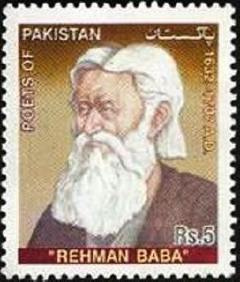
 Pathan is very notable for verse; they are enthusiastic and energetic, as proven by their lovely abilities. Their well-known artists incorporate Khushkal Khattak, Rahman Baba, and Amir Kror Suri.


The most renowned and most established type of Pakhtun verse is Tappa. The first refrain is more limited while the following line is longer, yet it addresses generally human feelings. It is additionally famous among the Pashtuns that a student would sing tappa, the old in their hujrahs.


It's the main melody that is sung at the hour of grieving and marriage. In song, customary Pashto instruments 'mangai' and 'rubab,' are accustomed to sing it. It has up to sixteen distinctive amicability models and is sung with a full orchestra.


Tourist point of KPK

KPK is known for the traveler point for experiences and voyagers. The territory has shifted scenes, going from tough mountains, valleys, slopes and thick rural ranches. The district is likewise popular for the ancestral root. There are number of Buddhisht archeological destinations from Gandhara region like Takhtbhai Pushakalvati. There are different many historical monuments which attract people from all over world.


There are many tourist points in KPK which will be discussed in my next article.