Facebook

Saturday, January 15, 2022


Kumrat Valley-The Hidden Gem

A natural depression located within the higher Dir district of KPK, Pakistan, Kumrat natural depression may be a magic place. The valley is found at a drive of concerning two hours from the city of Thai. The foliage and funky weather of Kumrat valley throughout the summer season attracts thousands of tourists from all round the world.

Wood Canal, Kumrat 

Kumrat valley has inexperienced meadows, snowy mountains, Panjkora River, and  forests of foggy mounds. The forests are home many different kind of plant and animals. The cedar forest trees are one amongst the attention-grabbing options of Kumrat Valley. The dense cedar forest trees create the ambiance a lot of lovely and also the valley greener and therefore attract many tourists. Kumrat valley is one of the best choices for camping during spring season. Tourist from different places visit Kumrat valley for picnic and camping. There are well developed sites for camping, borne fire and picnic. In summer the season is pleasant. Summer temperature ranges from 15 to 25 C. while in winter the temperature ranges from -2 to -10C. Teenagers who love adventure visit the place during winter.

To reach Kumrat from any town in Pakistan, you initially got to get to the city of Thall that is splendidly referred to as the doorway to the valley. Trip organizers to Kumrat usually use it as a launching point. From Thall, you have got to require the route of Uttar Road, which is truly a roller-coaster of twist and turns because of the mountainous landscape of the region.


In Utrar, a little town in KPK, you'll be able to rent a shared taxi, the price of which is PKR 150-200 per person. However, from Utrar Bazaar to Thall, you would like to require a 4X4 Jeep, which is able to even be shared by different passengers, cost accounting you PKR five hundred per person. Finally, to induce to your destination, you have got to rent a jeep; now a personal one with a driver that may value you somewhere around PKR 2000-4000, counting on the season and therefore the weather.


Waterfalls and Lakes

If you're keen on waterfalls, then this place is for you. You’ll fancy here lovely and wonderful waterfalls as a result of there are variety of waterfalls during this spectacularly beautiful place.

Katora Lake


As I discussed above, you'll see the Katora Lake in Kumrat Valley, that is one in every of the foremost beautiful lakes in Pakistan.


Foods and Accommodation

As regards the foods and accommodation, you'll not notice several hotels or restaurants in Kumrat Valley. Thus it's extremely suggested that you simply take your own food and necessary luggage. Anyhow, the govt. of KPK and native authorities are attempting to create necessary living arrangements for tourists.


Camping, Kumrat Valley


Wild Animals

Variety of animals, together with snow leopards, monkeys, brown bears, porcupines, Markhor, ibex, deer, jackals, musk, manual pheasants, and chakores are found in Kumrat Valley. The govt. of KPK is getting to declare it national part.

There are also many different facts regarding this valley. But rather than simply looking forward to reading, you want to attend this lovely, lavish inexperienced vale and luxuriate in the superb sceneries, mountain views, beautiful rivers, waterfalls and lakes, picket canals and far more.

End Note:

Pakistan is blessed with many beautiful places like Kumrat Valley, Malamjaba, Kalam and many more. As a civilized nation it is our duty to keep our environment neat and clean. In northern areas people usually left the plastic bags, papers and other garbage their which can pollute and destroy the natural habitat of these places. Recently Pakistan was considered as best place for tourist we should maintain this positive image forever.

Friday, January 14, 2022

Bhong Mosque

The late Rais Ghazi Mohammad, the landowner of an enormous bequest, started this undertaking in 1932 in Bhong town, the most significant of the dispersed towns on his huge property. The mosque was to be the most radiant structure in his royal residence compound which likewise incorporated a more modest mosque, a madrasa and spaces for understudies. Crafted by experts accumulated from everywhere Pakistan and India (ace bricklayers and skilled workers from Rajasthan, calligraphers and painters from Karachi), the compound was planned and built over a time of almost 50 years.


 Comprehensively varied in their utilization of sources, the manufacturers acquired complex components from neighboring Lahore, just as Iran, Spain and Turkey, and joined them with Western frontier components of the 1940s. Materials and artworks utilized reach from the conventional (teak, ivory, marble, hued glass, onyx, frosted tile work, fresco, reflect work, overlaid lattice, ceramic, calligraphic work and trim) to the cutting edge and manufactured (marbleised modern tile, fake stone confronting, terrazzo, shaded concrete tile and created iron). Just conventional materials were utilized in the mosque insides. In the expressions of the jury: Bhong cherishes and embodies the famous desire for Pakistan with all its life, pride, pressure and opinion. Its utilization, and abuse, of signs and images communicates suitable developing agonies of an engineering experiencing significant change.


Thursday, January 13, 2022

Wazir Khan Mosque

Background

It was built by the Governor (or Wazir) of the Punjab, Hakim Shaikh Ilm-ud-din Ansari. The construction of the mosque commenced in 1634. A short walk away from the Lahore Fort, the mosque acquired political importance as it became the official destination for the Emperor's Friday congregational prayers.

The Wazir Khan mosque is rectangular, estimating 86.17 x 50.44m (282.7 x 165.4 feet), with the four monumental minarets (minars) characterizing the sides of the principle patio.


It is set on what has come to be known as the Royal Trail, a 1.6 kilometer stretch from Delhi Gate - one of the 13 doors of the walled city of Lahore - that confronted the seat of the Mughal realm. Mughal Emperors rode through this entryway to the Lahore Fort.

Wazir Khan Mosque has borne observer to somewhere around twelve Mughal rulers, the extraordinary time of the British Raj, the ridiculous Partition of the Indian subcontinent, and the short however momentous history of current Pakistan. The mosque was so situated in the focal point of the city that every one of the significant courses and marketplaces connected to it at right points.


Developed over a time of seven years, it was worked around an old underground burial place of the holy person Syed Mohammad Ishaq Gazrooni, otherwise called Miran Badshah, who moved from Iran in the thirteenth Century and resided in Lahore during the hour of the Turkish-Muslim Tughlaq administration.


Badshai Mosque

History 

The development of the mosque was begun in 1671 under the prosperous and blossoming territory of the 6th Mughal Emperor Muhi-ud-Din Muhammad generally known by the name of Aurangzeb. The Badshahi Mosque required just two years to be finished under the management of Fida'i Khan Koka who was Mughal Emperor Aurangzeb's brother by marriage and the legislative head of Lahore. The mosque is intensely impacted by the Persian engineering style and Aurangzeb explicitly followed the style of Shah Jehan's Jama Masjid in Delhi. The normal quality of the two mosques is the red sandstone with white marble decorate. The entry of the mosque further oozes its respectability and style.


The Badshahi Mosque complete name "Masjid Abul Zafar Muhy-ud-Din Mohammad Alamgir Badshah Ghazi" is written in decorated marble over the vaulted entry. The wonderful door itself is exceptionally fascinating as it contains a few chambers that are not open by the overall population, strangely enough one of the rooms is said to contain the hairs of Prophet Muhammad (SAW) and that of his child in-law Ali. This is additionally viewed as one reason for its development.

As you go through the entry you set foot in a broad sandstone cleared yard spreading over an area of 276,000 square feet which can oblige up to 100,000 admirers. The supplication chamber has a central calculated specialty with five specialties flanking it which is around 33% the size of the central specialty. The mosque has three marble vaults, the greatest of which is arranged in the center mark of the mosque, and which is flanked by two more modest curves.


The development of the mosque was begun in 1671 under the prosperous and blossoming territory of the 6th Mughal Emperor Muhi-ud-Din Muhammad generally known by the name of Aurangzeb. The Badshahi Mosque required just two years to be finished under the management of Fida'i Khan Koka who was Mughal Emperor Aurangzeb's brother by marriage and the legislative head of Lahore. The mosque is intensely impacted by the Persian engineering style and Aurangzeb explicitly followed the style of Shah Jehan's Jama Masjid in Delhi. The normal quality of the two mosques is the red sandstone with white marble decorate. The entry of the mosque further oozes its respectability and style.

Architecture 

The Badshahi Mosque is a presentation of the incredible taste and intensity of the sovereign around then, both the inside and outside are particularly created. The rich frivolity in plaster lattice (Manbatkari) and framing with a fresco contact upgrade the inside of the mosque and stone carvings alongside marble trim on red sandstone, particularly of loti structure themes in intense alleviation, embellishes the outside. Four octagonal three-story minarets of 196 feet are found at the four corners of the mosque that are topped by a marble covering

Shah Rukn-e-Alam

Sheik Rukn-ud-Din Abul Fath (1251-1335) generally known by the title Rukn-e-Alam (Pillar of the World) was among the prominent Sufi holy people from Multan, Pakistan. He was the child of another Sufi sage, Pir Sadar-Al-Din Arif, and was the grandson and replacement of Shaikh Baha-Ud-Din Zakariya.

Shaikh Rukn-e-Alam (Rukn-al-Din) was covered in the sepulcher of his granddad, as per his own will. After at some point, in any case, his final resting place was moved to the current catacomb, which was worked somewhere in the range of 1320 and 1324. The holy person is as yet venerated today and his burial chamber is the focal point of the journey of north of 100,000 pioneers from everywhere South Asia who visit and recognize his memory.


The burial chamber building is an octagon, 51 feet 9 creeps in distance across inside, with dividers 41 feet 4 inches high and 13 feet 3 inches thick, upheld at the points by inclining towers. Over this is a more modest octagon 25 feet 8 inches, on the outside side, and 26 feet 10 inches high, leaving a restricted entry all round the highest point of the lower story for the Moazzan, or public guest to petitions. The entire is overcomed by a hemispherical arch of 58 feet outside distance across. The complete tallness of the structure, including a plinth of 3 feet, is 100 feet. As it remains on the strategic position, the complete stature over the street level is 150 feet. Other than its strict significance, the sepulcher is likewise of impressive archeological worth as its vault is rumored to be the second biggest on the planet, after Gol Gumbaz of Bijapur, India.

The sepulcher is constructed altogether of red block, limited with light emissions wood, which have now become dark after such countless hundreds of years. The entire of the outside is intricately ornamented with coated tile boards, string-courses and parapets. Colors utilized are dull blue, purplish blue, and white, appeared differently in relation to the dark red of the finely cleaned blocks. The burial chamber was said to have been worked by Ghias-ud-Din Tughlak for himself during the times of his governorship of Depalpur, somewhere in the range of 1320 and 1324 AD, however was given by his child, Muhammad receptacle Tughluq to the descendents of Shah Rukn-e-Alam for the last's internment in 1330.


During the 1970s the catacomb was entirely fixed and remodeled by the Auqaf Department of the Punjab Government. The whole sparkling coated inside is the consequence of new tiles and brickwork done by the Kashigars of Multan.


Tuesday, January 11, 2022


Swat-The Mini Switzerland

Swat is the one of the beautiful district of KPK, Pakistan. Swat is also famous by the name “Mini Switzerland” or “The Switzerland of Pakistan”. Swat valley is known for its beautiful landscapes, valleys, lakes, forests and mountains covered by snow caps. There are many tourist destinations in swat which attract tourists all over the world. The following are famous places of swat:

 Malam Jabba

Malam Jabba is 314 km from Islamabad. The development of swat motorway further reduced the travelling time to reach swat. Malam Jabba is famous for ski tournaments.  Six to eight feet of snow falls in Malam Jabba. In winter different winter sports tournaments including ski takes place there. Before Covid 19, different ski divers from all over the world participated in ski tournaments. The government also improved the infrastructure and development different resorts for tourist. The local authorities are also directed to provide every facility to tourists and to guide them to promote positive image of Pakistan.  1.5Km long chair lift attract families especially children. There is also one of the Pakistan highest zip line which is 9200 feet above sea level and its length is about 2000 feet.

You can visit Malam Jabba at any season. Every season has its own beauty there. Most tourists visit this place during winter season between December and February. Because in winter this become people crowed in winter due to Ski Championship in which many foreign players participate.  

Malam Jabba chair lift


kalam

Kalam could be a spectacular natural depression is found within the higher Swat at a distance of 96km (59 miles) from Mingora and 326 kilometer (202 miles) from capital of Pakistan in Pakistan. The Kalam valley city and hill station are settled at an elevation of regarding 2,000m (6,600 ft.), nonetheless its alternative traveler attractions shake up to about 6,096m (20,000 ft.) in high.

Kalam is famous for lakes, waterfalls, meadows, lush green forests and different cultural festivals. Mahodand Lake is famous tourist spot of Kalam. In local Pashto language it is known as “LAKE OF FISHES”. Every year thousands of tourists visit this place for camping, fishing and enjoy both in winter and summer. Another famous lake which many people don’t know is Izmis Lake. There is no road access to this lake so only accessible by hiking and trekking. The trekking is about 3 hour depending upon the weather conditions. Proper hiking and trekking gear are advised for it. The Lake is of enticing emerald color, encircled by lush inexperienced mountains. Many tourists visit the lake for camping to enjoy the peaceful environment and feel the beauty of nature. If you are camping lover then this place is best for camping with proper camping gears and other necessary things. There are many forests in Kalam which are natural habitat for different wild lives. These are “The national forest of Kalam, The great forest, and Kalam forest playground”.  The Kalam Bazar is one of the commercial and market center of the valley. The handicrafts, shawls, handmade ornaments in the bazar attract different tourists. In this bazar there are many small hotels which serve the tourist and visitors with their cultural and local dishes. The uniqueness of this bazar is that it is located on the bankside of the river. It is also known as DownTown.   

Mohodand Lake

   Bahrain

Bahrain could be a lovely city and it's located in Swat. Bahrain is known for native handicrafts. The weather of Bahrain is incredibly gentle and warm. January is that the best month to go to Bahrain Valley. It’s the joining-point of Daral and Swat River. Through a car, you'll be able to reach to Bahrain from capital of Pakistan in 6 hours. The travel distance of Bahrain from Islamabad is 307 km. Bahrain is famous for handicrafts like shawls, woolen hats, and jewelry.              


Bahrain


 Kumrat Valley
                  

 Kumrat valley is one in all the scenic valleys of KPK. Mountains, forests, inexperienced meadows are the important attractions of this valley. Kumrat natural depression weather is extremely cold. Several waterfalls are located close to Kumrat natural depression.  Throughout summer season thousands of tourists visit Kumrat valley and luxuriate in the exciting beauty and greenery. Through a car, you'll reach to Kumrat natural depression from national capital in ten hours. The space of Kumrat Valley from Islamabad is four hundred km.

THE LAND OF MUGHALS

Punjab of Pakistan has an area of 205,344 km2 (79,284 sq mi) it is the second biggest region after Balochistan and is situated at the northwestern edge of the geologic Indian plate in South Asia. The region is lined by Azad Kashmir toward the north-east, the Indian provinces of Punjab and Rajasthan toward the east, the area of Sindh toward the south, the region of Balochistan toward the southwest, the region of Khyber Pakhtunkhwa toward the west, and the Islamabad Capital Territory toward the north.

The capital and biggest city is Lahore which was the chronicled capital of the India during the Moghul times. Other significant urban areas of Punjab incorporate Gujrat, Multan, Faisalabad, Sheikhupura, Sialkot, Gujranwala, Jhelum and Rawalpindi


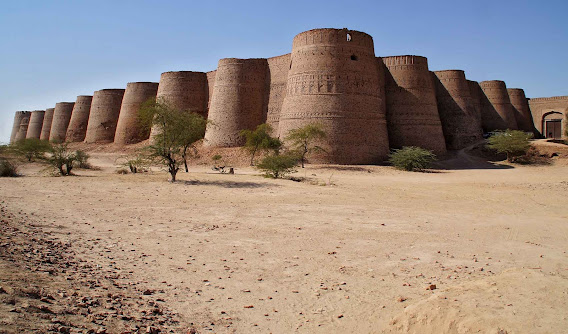
Derawar Fort (Urdu: قِلعہ دراوڑ), is a huge square fortification in Ahmadpur East Tehsil, Punjab, Pakistan. Roughly 130 km south of the city of Bahawalpur, the forty strongholds of Derawar are apparent for some miles in the Cholistan Desert. The dividers have an edge of 1500 meters and confront thirty meters high.

Derawar stronghold was first inherent the ninth century AD by Rai Jajja Bhati, a Hindu Rajput leader of the Bhati clan, as an accolade for Rawal Deoraj Bhati the ruler of Jaisalmer and Bahawalpur.The fortification was at first known as Dera Rawal, and later alluded to as Dera Rawar, which with the progression of opportunity arrived to be articulated Derawar, its present name.

In the eighteenth century, the stronghold was taken over by Muslim Nawabs of Bahawalpur from the Shahotra clan. It was later reconstructed in its present structure in 1732 by the Abbasi ruler Nawab Sadeq Muhammad, yet in 1747 the fortification slipped from their hands attributable to Bahawal Khan's distractions at Shikarpur.

Nawab Mubarak Khan took the fortress back in 1804. 1,000 year-old sling shells were found in the trash almost a rotting divider in the fort. Nawab Sadiq Muhammad Khan Abbasi V, the twelfth and last leader of Bahawalpur State, was brought into the world in the fortification in 1904. This generally huge stronghold presents a tremendous and great construction in the core of the Cholistan desert, however it is quickly weakening and needing prompt preventive measures for protection


Wednesday, January 5, 2022


The Spiritual Attraction of Swat, KPK

Swat is the district of KPK province of Pakistan. It is considered as the third largest district of KPK having population of 2,309,570. It was also considered as the Switzerland of the Pakistan due to its beautiful landscape and mountains covered with snowcaps.

History of Swat

The old name of swat was UDYANA which was then changed to SUVASTU. This land was first captured by Mahmud of Ghazni which was then taken by the Yusufzais. Majority of the local speak Pashto as their native language. They also speak Urdu to great extent. It was the princely state of Yusufzais which become the part of Pakistan after independence.

Swat valley was greatly affected by natural disasters including floods and earth quake. The 2010 flood destroyed the infrastructure and roads. The tourist points were affected badly. Before 2008 Taliban and Pakistan Army war in the region the buildings, roads and bridges were damaged. The peaceful region of swat was considered as dangerous area back in 2008. Several incidents of killing and kidnapping of foreign tourist damaged the image of swat. These incidents also force the local people to left the region and migrate to other districts of KPK.

After 2009, Pakistan Army took over the valley and restored the infrastructure, roads, bridges and schools. Slowly and gradually the peace of the valley was restored by the help of local people, government and Pakistan Army and forces.

Now Swat valley is one of the top tourism destinations in Pakistan and also in the world. The beauty attracts a lot of tourist around the world especially in winter season. In winter season, ski players all over the world visit Malamjaba for ski tournaments.

Heritage of Swat Valley

The people of swat valley are simple innocent people. They usually made handmade ornaments and embroidery shawls, bags, caps and other decorative items. The basic source of income is agriculture. They grow different fruits and vegetables. The apple of swat is famous in Pakistan. 18 different types of apples grow in swat region. People also grow strawberries peaches and oranges. Swati embroidery is also famous in swat. In past, it was the hobby of the unmarried young girls to make embroidery dresses, shawls, pillow covers, table cloth, scarves, handkerchief etc.


Heritage places to visit in Swat

There are many old heritage and famous tourist points in swat which many of us don’t know at all.

Buddhist Stupas

There are many famous archaeological sites in swat which belong to Buddhist period. There are estimated 1400 stupas and monasteries in swat. They were used for worship and religion education.

Swat Museum

There is also swat museum which contain old heritage belong to the Gandhara Civilization. It is located between the cities of Mingora and Saidu Sharif.

White Palace (Sufed Mahal)

White Palace (Sufe'd Mahal)
In Saidu Sharif there is a famous palace known as White Palace or Sufed Mahal. It was the residence of Wali before and after the independence of Pakistan. This palace contains 30 rooms. People from different region visit this beautiful palace.


Shrine of Akhund (Saidu Baba)

Saidu is called “Pious City” because of the shrine of Akhund. Saidu Baba was a religious leader who played important role in the formation of Swat. He fought many battles against the British Forces by leading the Yusufzais and other Pashtun tribes.

Every year large number of visitors and devotes visit the shrine of Saidu Baba in the Swat. 

Saidu Baba Mosque


Saidu Baba Mosque


Barikot Ghundai

It is a small town in the district of Swat, KPK. In past years, many Hindu temples were discovered there. Barikot Ghundai becomes the famous and attractive place after the discovery of 1300 years old temple. The temple was believed to be linked with the God Vishnu. It was built by Hindus more than 1300 years ago during the period of Hindu Shahi. Recently, many archeologists around the world visited the place to gather samples, traces and evidences.


Old Buddha


Swat is also known as “The Switzerland of Pakistan”, or “Mini Switzerland” due to its beautiful landscapes, valleys, lakes, and mountains covered with snowcaps. The detail will be shared in next article/blog.

 Hope you all enjoyed reading the article.


Jhelum Valley:

This is an ideal valley both the homegrown and worldwide sightseers. The twisting stream Jhelum goes through from east to west between the high green heaps of this valley and joins the waterway Neelum at domel close to Muzaffarabad city.

A 59 Kms in length metal street runs along the stream Jhelum from Muzaffarabad to Chakothi, which is found neighboring line of control (LOC). Transports and carts handle on this course routinely while the course likewise utilized for Muzaffarabad Sri nagar exchange.

Gharhi Dopatta:

It is 24 kilometers from Muzaffarabad. The town encompassed by mountains is situated on the two sides of stream Jhelum. Instructive, clinical, phone, convenience and shopping offices are accessible here. AJK Government has set up here an "Augmentation Services Management Academy (ESMA)", which gives preparing offices of worldwide level. A few private lodgings are accessible as indicated by the neighborhood standard.

Chinari:

A way off of 51 Kms from Muzaffarabad and encompassed by high slopes, it is arranged on the left bank of waterway Jhelum. The whole fundamental offices viz. marketplace, medical clinic, schooling, mailing station, banks, phone and a few private inns are accessible as per the nearby norm.

Chakothi:

Chakothi, 8 Kms in front of Chinari, is a boundary town. Just homegrown sightseers can visit this region. A few private lodgings are accessible as per the neighborhood standard.

Chikkar:

This delightful summer station a good way off of 46 Kms from Muzaffarabad is arranged on top of the mountain, with a height of 1607 meters over the ocean level on the southern side of Muzaffarabad. A street branches off at Dhanni Baqallan, a spot around 33 kilometers from Muzaffarabad and prompts Chikkar, which is at a rise of 1828 meters. The extraordinary highlights of this delightful spot are its solid environment and beautiful environmental factors. Remaining past that certain point, one can have an interesting perspective on the sub-valleys. AJK Tourism Department has built a traveler Motel here found 03 Kilometer from Chikar Bazar. A few private lodgings are accessible with great norm.

Zilzaal Lake:

Because of the overwhelming tremor of October eighth 2005, as different spaces of AJK, the regions in Jhelum Valley likewise saw gigantic pulverization. Four towns to be specific "Curli", "Bhat Shir", "Lodhabad" and "Padder" situated in the middle of Chikkar and Bani Hafiz were accounted for to be totally annihilated when the mountains impacted gravely and got changed over into piles of rubble covering around 575 individuals under.


The fell mountain tops and the rubble of the four towns obstructed the regular progression of the water which brought about the making of a characteristic Lake extended over a space of around 3 Kms. This recently conceived lake was named as "Zilzaal Lake" and presently it has acquired extraordinary arrangement of fame among travelers. it is arranged with a height of 1570 meters ASL and travelers can be getting a charge out of on drifting on this lake. A few private lodgings are accessible with neighborhood standard.

Loon Bagla:

10 Kms from Chikkar, arranged at an elevation of 2011 meters above ocean level, it is one more worth seeing slope station in thick green pine timberlands and is connected by a reasonable climate street. The customary prerequisites of life are accessible in the little marketplace.

Dungian:

It is located about 5 Kms ahead of Loon Bagla. This place is surrounded by Silver Fir forests. Its high altitude of 2071 meters and beautiful landscape has a special attraction for tourists. An experimental station for the proliferation of medicinal herbs has also been established at this place. The beautiful tourist spot Sudhan gali can be visited from this place which is approximately 8 kilometers uphill. Some private hotels are available according to the local standard.

Danna:

In the midst of Muzaffarabad to Kohala, a street bifurcates the thruway and prompts Danna, going across the confounded streets. Danna is known for its solid environment and appealing beautiful magnificence with a height of 1447 meters over the ocean level. A vacationer rest house is accessible for convenience. From here one can go to Dheerkot, a realized slope station in District Bagh. A few private lodgings are accessible as per the neighborhood standard.


Wednesday, December 29, 2021


Khyber Pakhtun Khwa (KPK)

Introduction

KPK is the abbreviation of Khyber Pakhtun Khwa. It was previously known as NWFP (North West Frontier Province). This name was given by the British ruler during their rule. It is situated on the North West side of the Pakistan along the Afghanistan border. In 2010, under the18th amendment in Pakistani constitution its name was changed to KPK. The total area of KPK is 74,521 km2.  The official language of the province is Pashto. Others language include Chitrali, Kohistani, Urdu and Hindko.  The capital of KPK is Peshawar.  The Khyber Pakhtun Khwa means “The Pathan/Pashtun Culture and Civilization”.

Climate

Khyber Pakhtunkhwa's environment fluctuates enormously for the region of its size, covering most of Pakistan's environment types. The territory extends southwards from Hindu Kush's Baroghil Pass, covering around six levels of the scope; it is principally a sloping landscape.

Dera Ismail Khan is perhaps the hottest district in South Asia, while the temperature in the mountain reaches toward the north is gentle in the summers and incredibly cold in the colder time of year. Since the air is frequently very dry, the everyday and yearly temperature ranges are very huge.

Dera Ismail Khan


·      Central KPK

Since muggy breezes starting from the Arabian Sea can invade the area, precipitation is generously heavier on the southern sides of Nanga Parbat and in the Lower and Upper Dir Districts than additional north. Winter despondencies produce critical precipitation when they conflict with mountain inclines. 

Nanga Parbat


Nanga Parbat


The storm, notwithstanding its brief term, is frequently powerful. As a result, the southern slants of KPK are Pakistan's wettest locale. Yearly precipitation has a scope of 500 mm (20 inches) in the most secured spots to 1,750 mm (69 inches) in spaces of Abbottabad and Mansehra Districts.


·        Southern KPK

The temperature in southern KPK is surprisingly high: Dera Ismail Khan, the region's southernmost locale, is perceived as being perhaps the most smoking region on the planet, with a normal temperature of 50 °C (122 °F). During the cooler months, evening time can be cold and ices are normal; snow is exceptional, while daytime temperatures remain sensibly warm with a lot of daylight.

Dera Ismail Khan


 Culture of KPK

Pashtun culture depends on Pashtunwali and Islam that is an old lifestyle. Its set of experiences and roots have been antagonistic, however there couldn't be any agreement shaped. There were various hypotheses about the starting points of Pashtuns, expecting that they have Jewish, Arab, Aryan, or mixed origin. None was adequately enticing to draw a choice. Pathans are profoundly inquisitive and anxious to be aware of their race's starting point; however it may not be a major worry for specific races. Certain individuals expect that they may likewise be connected to Khalid Bin Waleed and as a result of that that Pathans might have an Arabic foundation.

All the while, one hypothesis joins them to Adolf Hitler's, which has an association with the Afghans to the Aryans.


Vacations, Special Occasion and Rituals

Pashtuns observe Wada Koidana, Gham khadi, Topak tamacha, kat bistara, hujra, and furthermore the appearance of Spring Sparlay, otherwise called 'Nava Wroz' (New Day). It is an old yearly Pashtun occasion that commends the start of spring and the New Year.

Hujrah


Poetry and Tappa

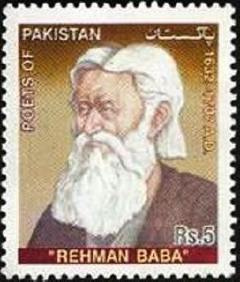
 Pathan is very notable for verse; they are enthusiastic and energetic, as proven by their lovely abilities. Their well-known artists incorporate Khushkal Khattak, Rahman Baba, and Amir Kror Suri.


The most renowned and most established type of Pakhtun verse is Tappa. The first refrain is more limited while the following line is longer, yet it addresses generally human feelings. It is additionally famous among the Pashtuns that a student would sing tappa, the old in their hujrahs.


It's the main melody that is sung at the hour of grieving and marriage. In song, customary Pashto instruments 'mangai' and 'rubab,' are accustomed to sing it. It has up to sixteen distinctive amicability models and is sung with a full orchestra.


Tourist point of KPK

KPK is known for the traveler point for experiences and voyagers. The territory has shifted scenes, going from tough mountains, valleys, slopes and thick rural ranches. The district is likewise popular for the ancestral root. There are number of Buddhisht archeological destinations from Gandhara region like Takhtbhai Pushakalvati. There are different many historical monuments which attract people from all over world.


There are many tourist points in KPK which will be discussed in my next article.